
Menu
19. August 2026
Naschmarkt Vienna: your guide to the city’s most famous market
Naschmarkt Vienna: your guide to the city’s most famous market
- 19. August 2026
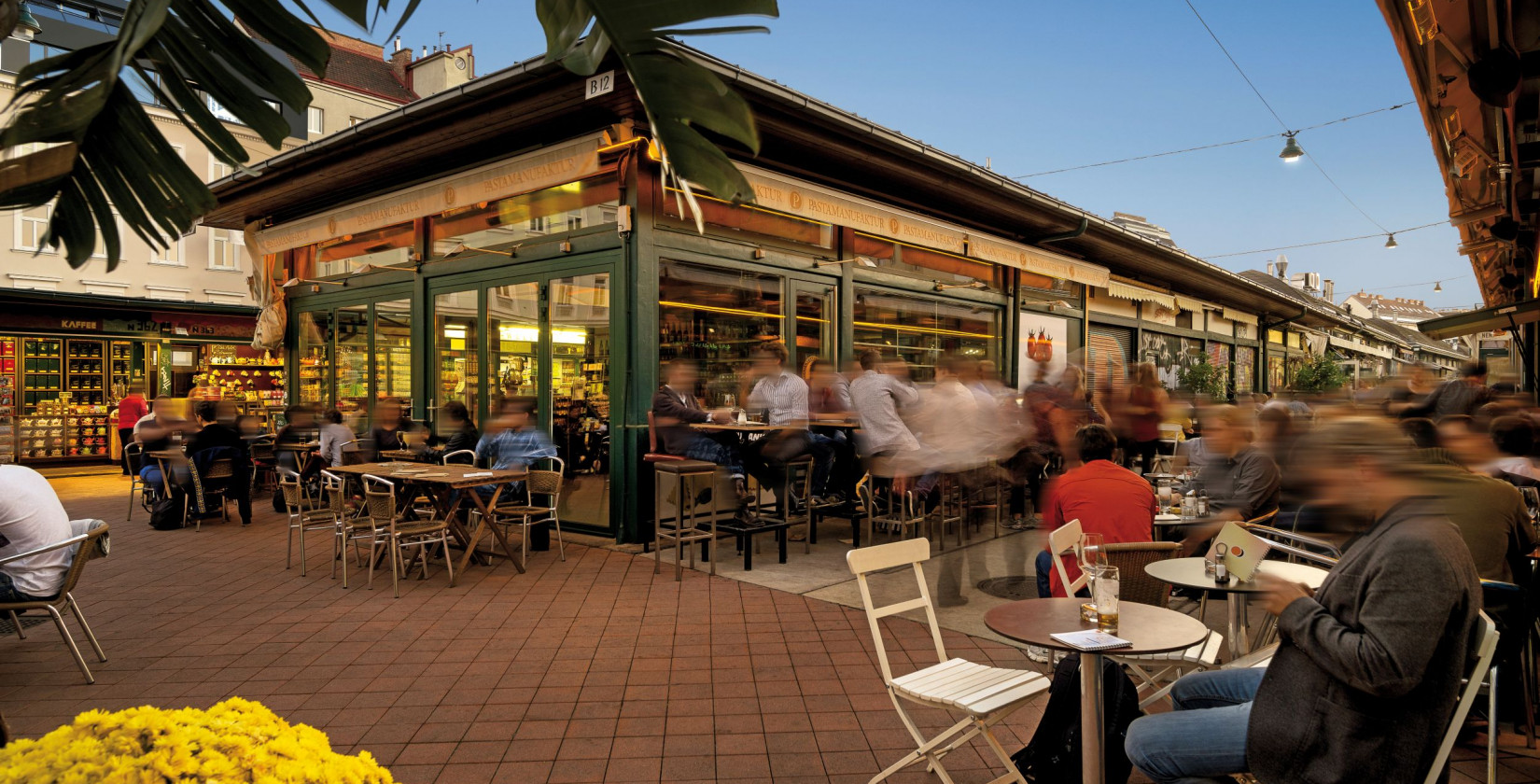
It’s a Saturday morning at Vienna’s Naschmarkt. The air smells of fresh bread, coffee and spices. While some visitors are already heading home with a shopping bag full of vegetables and cheese, others are still sampling different varieties of olives or browsing the flea market for vinyl records. Just as diverse as the products on offer is the Naschmarkt itself: it’s a food market, meeting place, culinary journey around the world and Viennese institution all rolled into one. And, along the way, there’s plenty of history to discover, too.
A piece of Viennese history
Food has been sold at the site of today’s Naschmarkt since as early as 1774. Back then, the market was known as the “Aschmarkt” and was particularly famous for its dairy products. Over time, the range of goods became increasingly diverse, from fruit and vegetables to pulses, nuts and even pigeon feed. The pigeon feed is long gone, but the market’s colourful variety of food has remained.
As the range of products changed, so did the market’s name. The Aschmarkt became the Naschmarkt – and we think that’s a much better fit! After all, even back in the 18th century, you could find exotic delicacies such as candied orange peel and dates here. These sweet specialities are what gave the market its new name and helped make it the place for indulging in a little naschen – “nibbling” or “treating yourself” – to this day.
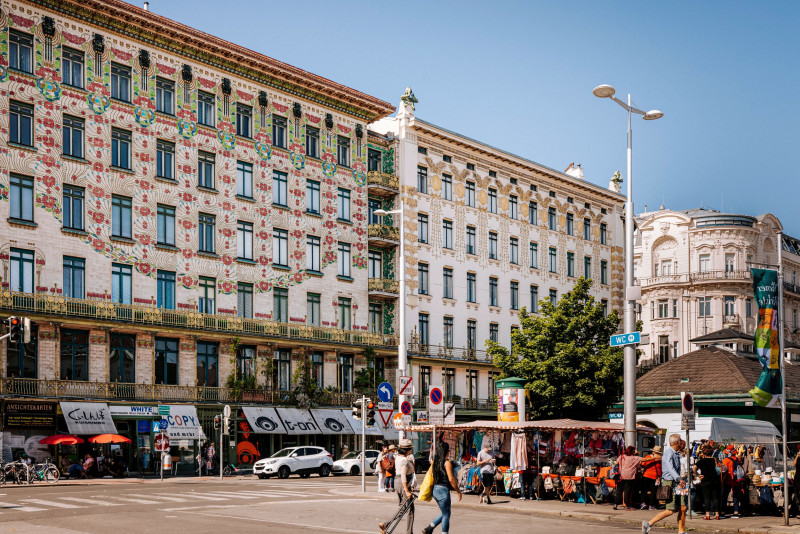
Today, the city’s most famous market stretches around 1.5 kilometres along the Wienzeile. Located between Getreidemarkt and Kettenbrücke, the Naschmarkt is set against one of Vienna’s most beautiful Art Nouveau backdrops.
Between market stalls and the flea market
“Where do I start?” That’s the question everyone asks on their first visit to the Naschmarkt. Our advice: just start walking and see where the market takes you. Take a look around, sample a few things and, above all, don’t fill up too quickly – there’s something new to discover and taste around every corner:
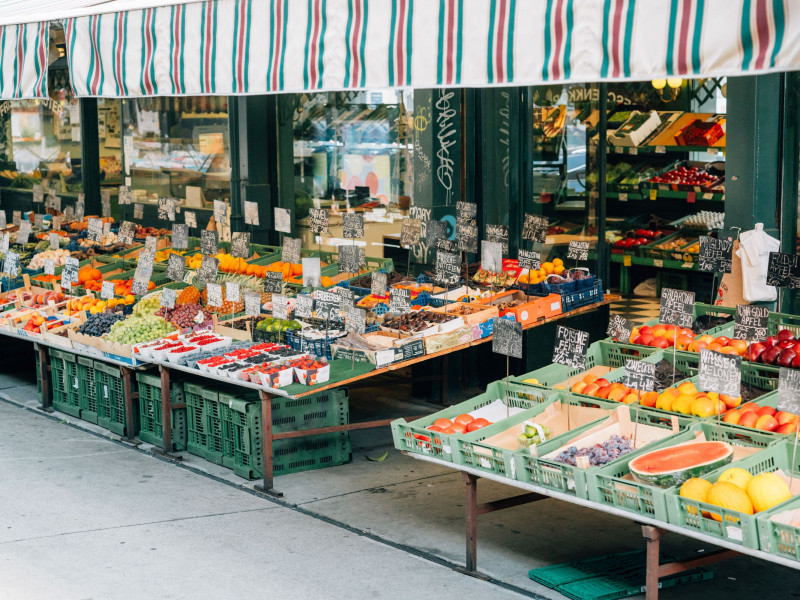
- Fruit and vegetables: Fresh fruit and vegetables are just as much a part of the Naschmarkt as its iconic green market stalls. Alongside local favourites, you’ll also find exotic fruits, herbs and dried fruit.
- Cheese, meat and fish: From mild and strong cheeses at Käseland and numerous varieties of bacon at Poehl to fresh and pickled fish at Gruber, the Naschmarkt offers both regional and international specialities.
- Spices: The spice stalls are well worth a closer look. Among saffron, sumac and different varieties of pepper, you’ll often find just the thing that’s still missing from your own spice rack.
- International specialities: A stroll through the Naschmarkt is like taking a small culinary trip around the world. Alongside olives, pickled vegetables, hummus and falafel, you’ll find plenty of products that you might otherwise only encounter on holiday.
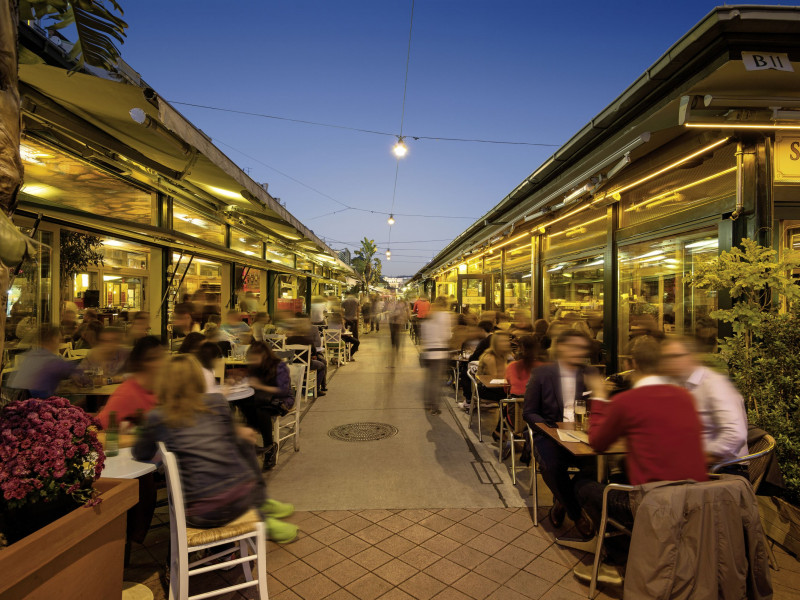
- Market stalls and restaurants: The Naschmarkt isn’t just a place to shop. Numerous restaurants and food stalls serve cuisines from all over the world. As the oldest restaurant at the market, Gasthaus Zur Eisernen Zeit has been serving traditional Viennese dishes since 1916.
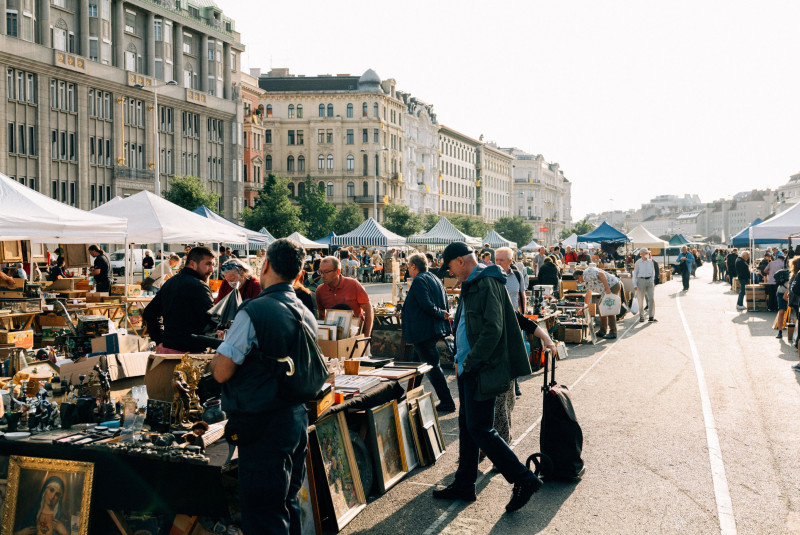
- Saturday flea market: Saturdays bring another highlight to the Naschmarkt. Since 1977, antiques, works of art, books, vinyl records and all kinds of curiosities have been sold right by Kettenbrückengasse underground station. You never know what you’ll find – and that’s exactly what makes the Naschmarkt flea market so appealing.
Schani's tip
For Kristina, Hotel Manager at Hotel Schani Naschmarkt and Hotel Schani Salon, every visit to the Naschmarkt feels a little like being on holiday: “The great thing is that you can easily spend an entire day at the market. Whether it’s breakfast, dinner, after-work drinks or celebrating a birthday, there’s always a great atmosphere at the Naschmarkt.”
For anyone looking to visit one of the many restaurants at the Naschmarkt, Kristina has two favourites: Café Do-An and Orient Occident. “Every time I’m at the Naschmarkt, I order one of two dishes: either the exotic salad at Do-An or the Köfte at Orient Occident.”
More than just a market – the neighbourhood around the Naschmarkt
Once you’ve sampled your way through the Naschmarkt and explored the curiosities at the flea market, there’s even more to discover in the surrounding neighbourhood – one of the liveliest parts of Vienna. In Mariahilf, small boutiques, cafés and restaurants meet the magnificent Art Nouveau buildings along the Linke and Rechte Wienzeile. The city’s most famous shopping street is also just a short walk away.
The Naschmarkt is therefore not only one of Vienna’s must-see places, but also a great starting point for exploring the city on foot. You can find the highlights for a walk through the neighbourhood in our Grätzel Guide.
For anyone who wants to do more than just visit the lively neighbourhood around the Naschmarkt and stay for a little longer, Hotel Schani Naschmarkt is the perfect base. Inspired by the history and colourful diversity of Vienna’s 6th district, we’ve created a vibrant meeting place where the neighbourhood around the Naschmarkt becomes not just somewhere to visit, but somewhere to call home for a few days.
Before you head off: what you should know
To make sure you don’t find yourself standing in front of closed market stalls, here are the most important facts at a glance.
- Opening hours:
Market stalls are permitted to open from Monday to Friday between 6:00 am and 9:00 pm and on Saturdays from 6:00 am to 6:00 pm. However, not every stall is open throughout these hours. The flea market takes place every Saturday from 6:30 am to 3:00 pm.
- Best time to visit:
Want to experience the Naschmarkt at its liveliest? Come by on a Saturday morning. If you’d rather take your time strolling around and sampling the food, we recommend visiting on a weekday morning.
- Getting there:
The easiest option is to get off the subway at Karlsplatz or Kettenbrückengasse stations. From there, you can walk from one end of the market to the other.
- Cash or card:
Most – but not all – stalls accept card payments, so it’s a good idea to carry a little cash with you.
Schanifun
Today’s Schani Fun is, of course, a perfect fit for the Naschmarkt.
Standl
= a small food or market stall, like the ones you’ll find at a Viennese market.
Fotos: © WienTourismus/Christian Stemper, WienTourismus/Paul Bauer
This could also be interesting for you
 23. November 2020
Fall Blues – What Discoveries Await Us in Vienna?
Read article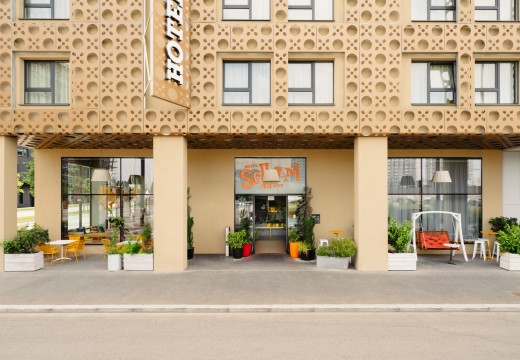 4. September 2023
Schani supporters – together for a better future
Read article 26. August 2024
Local Guide: Discover Vienna Around Hotel Schani Salon
Read article 19. November 2023
Salon Style
Read article 10. October 2022
Hiking in Vienna: Vienna City Hiking Paths Part 1
Read article 27. May 2026
Hot in the city? Seven tips that will surprise you!
Read article 18. November 2024
Christmas spirit in Vienna
Read article 31. October 2022
Alone on a city break: What you can do in Vienna
Read article 29. January 2026
ESC 2026 in Vienna: How the City Celebrates
Read article 29. June 2020
Smart Living – innovative hospitality at Hotel Schani Wien
Read article 5. March 2021
Green Building: Sustainable design at Hotel Schani Wien
Read article 29. May 2020
Around and About in Vienna After the Lockdown
Read article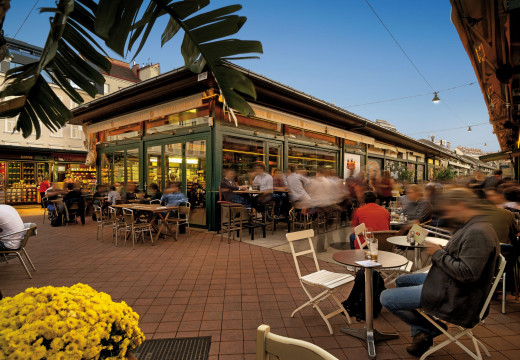 19. August 2026
Naschmarkt Vienna: your guide to the city’s most famous market
Read article 3. July 2024
Local Guide: Explore Vienna Around Hotel Schani Wien
Read article 11. May 2021
Spring is in the Air After Lockdown
Read article 11. May 2021
Mediterranean Flair in Vienna
Read article 10. November 2025
Let’s Waltz! – Vienna’s ball culture explained
Read article 29. May 2020
Stroll Through the Heart of Vienna After the Lockdown
Read article 9. August 2023